
Golf course shaping sits at the intersection of engineering, craft, and deep respect for the land. In regions like Central Otago and Queenstown Lakes, the landscape sets an exceptionally high standard — one that demands precision, adaptability, and an understanding that nature leads. Our role is to follow.
Below are the questions we’re asked most often, and the principles that guide every project we undertake.
The Machinery Behind Great Golf Course Shaping
What’s the most important piece of machinery in golf course shaping?
There isn’t one. Exceptional shaping relies on the right combination of earthmoving and finishing machines, operated by people who know how to read terrain. The tools matter — but the craft belongs to the operators behind them.
True performance comes from the harmony between operator, machine, and landscape.
The Most Underestimated Factor in Golf Course Construction
What’s the most underestimated part of golf course construction?

Water. Every decision — shaping, drainage, transitions, surface management — is designed around how water moves across and through the site.
Why Water Management Defines Every Other Decision
Get water wrong, and nothing else holds. Master it, and you master the course. Drainage is not a finish-line consideration; it’s the framework every other element is built around.
Why Central Otago & Queenstown Lakes Elevate the Craft
What makes the golf courses of this region iconic?
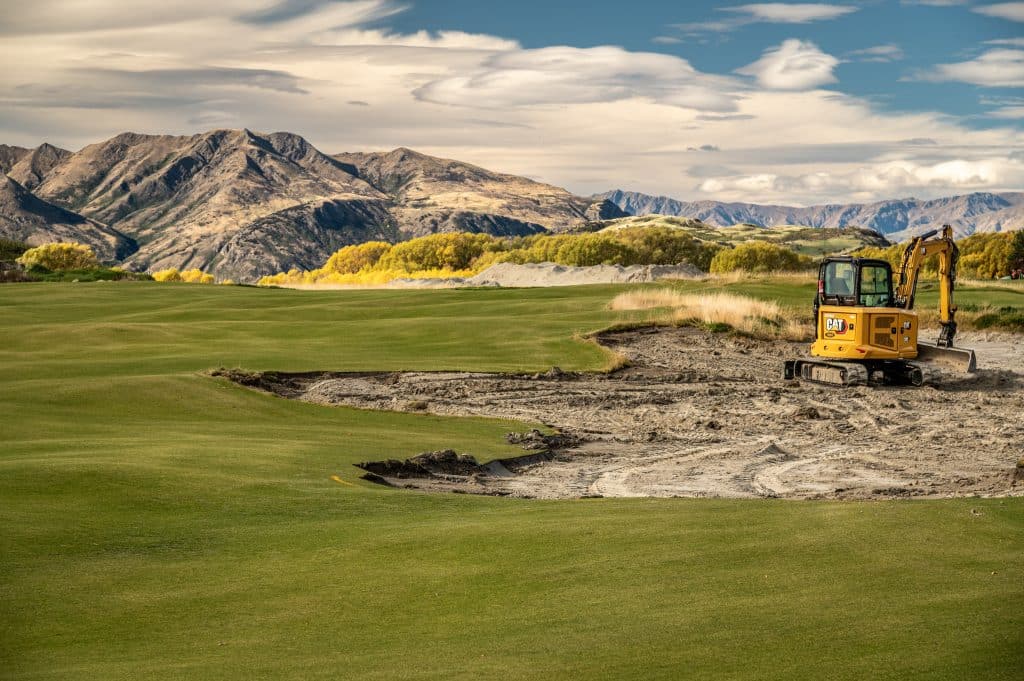
The Central Otago and Queenstown Lakes district — spanning Wanaka, Queenstown, Glenorchy, and the wider Southern Lakes — offers some of the most visually distinctive golf landscapes in New Zealand. Glacial-fed lakes, rugged mountain ranges, rocky outcrops, and wide open terrain create sites that golfers travel from across the world to experience.
Glenorchy, Wanaka & the Southern Lakes: A Landscape That Sets the Standard
That same beauty creates real complexity. Alpine weather patterns, silty glacial soils, and freeze–thaw cycles demand continuous adaptation and an intimate understanding of the land. Shaping in this environment means working with the natural terrain, it’s a game of allowing the existing contours to guide the design, not try to override it.
Here, the land leads. Our role is to shape with it.
What Separates Great Earthworks from Good Ones
What’s the real difference between good and great earthworks?
Good earthworks follow the plan. Great earthworks interpret the plan in conversation with the land.
Done well, the shaping feels as though it was always there. Preserving the natural character of a site while crafting a course that performs at the highest level — that’s the benchmark of exceptional earthworks.
Good meets expectations. Great elevates the terrain.
What Makes a Golf Course Feel Naturally Formed
What defines a well-shaped golf course?
A well-shaped course doesn’t compete with its surroundings — it complements them. Transitions, contours, and edges sit easily within the environment, enhancing rather than interrupting the existing landscape.
The best shaping disappears into the land.
Precision Tools That Define Course Playability
What tool is non-negotiable for precision shaping?
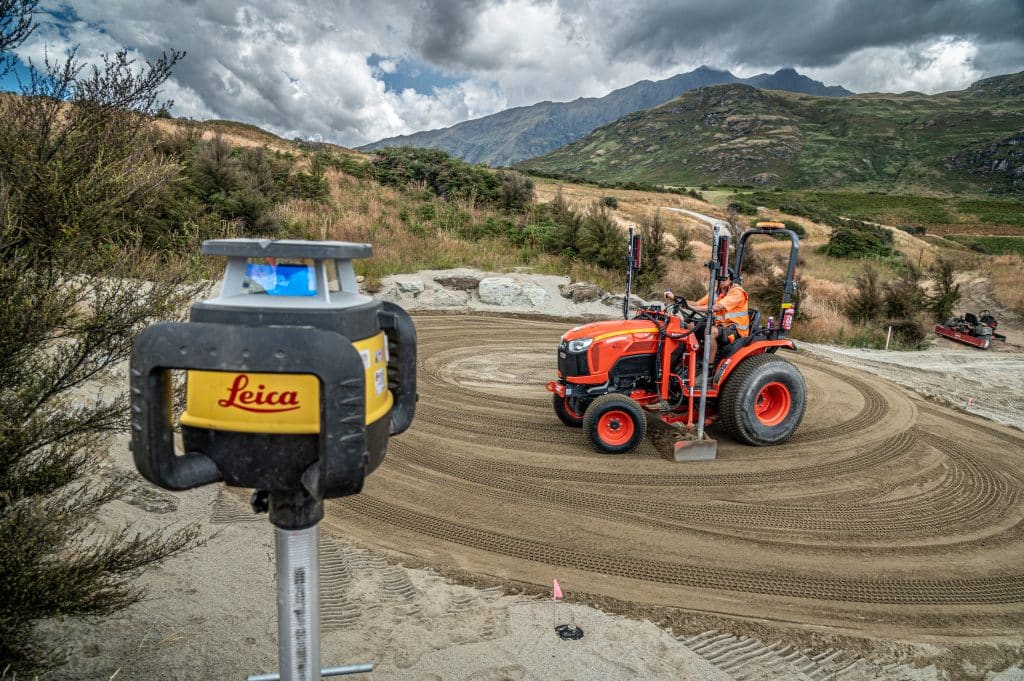
Dual Grade Laser Levelling: Accuracy to ±5mm
The Dual Grade Laser Level tractor is essential for achieving tee surfaces accurate to within ±5mm. That level of precision underpins consistency across the life of the course — in surface performance, maintenance, and long-term playability.
Precision isn’t optional. It’s foundational.
Golf Course Construction That Stands the Test of Time
Exceptional golf course construction is the result of understanding the land, interpreting the design with intelligence, and shaping with respect for both. When those elements work together, the result holds — visually, structurally, and in the way the course plays for generations.